 visitkiato.com
The School of Ancient Sicyon: The Birthplace of Greek Art
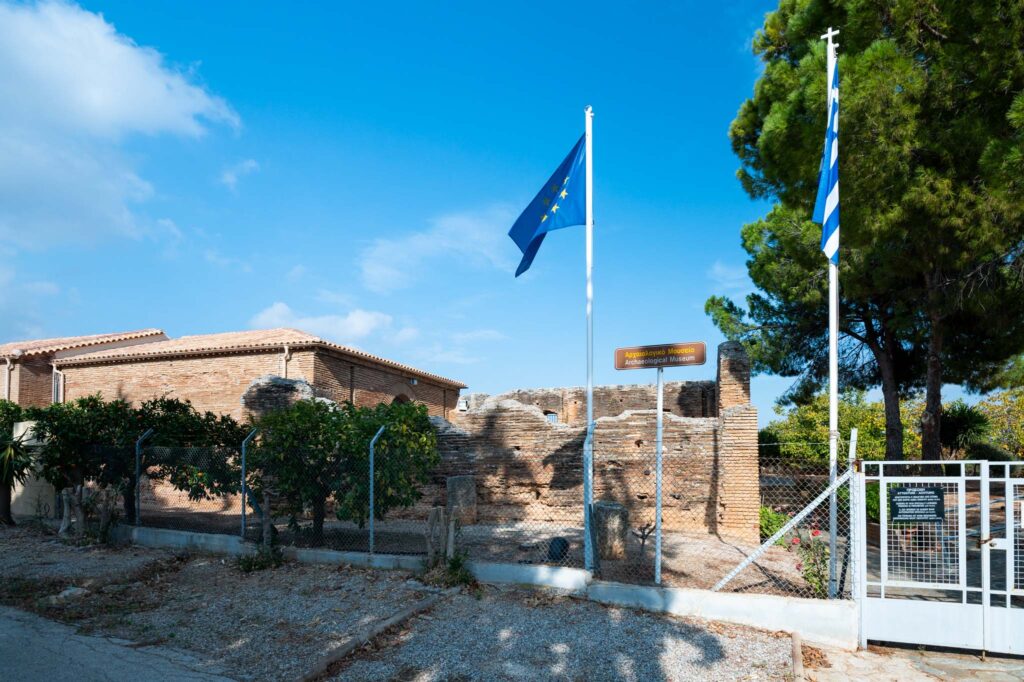
Just a few kilometres west of Kiato, perched on a strategic plateau above the modern village of Vasiliko, Ancient Sicyon stands as a silent witness to an era when Corinthia defined the aesthetic standards of the Western world. While many ancient cities were famous for their military prowess or commercial dominance, Sicyon achieved immortality through the arts. According to tradition, it is considered the birthplace of painting and the seat of the most renowned school of sculpture in antiquity, making it an essential destination for every lover of history and culture.
The Sicyonian School of Painting: Where the Image Was Born
The contribution of Ancient Sicyon to the visual arts is immeasurable. According to Pliny the Elder, the Sicyonians were the ones who “invented” painting, initially as skiagraphia—the tracing of a shadow’s outline. Over time, the city established the first formal school of painting, the Sicyonian School, which in the 4th century BC laid the foundations for the evolution of art from a craft into a science.
Under the guidance of masters like Eupompos and Pamphilos, the school imposed a rigorous curriculum that lasted ten to twelve years. Students did not merely learn how to draw; they studied mathematics, geometry, and anatomy, believing that art is a discipline of precision. From this prestigious institution graduated Apelles, the personal painter of Alexander the Great. The school’s influence was so profound that it standardized the technique of encaustic painting (using heated beeswax) and the use of the four-colour palette, shaping the trajectory of Hellenistic and Roman art for centuries.
Lysippus and the Revolution in Sculpture
If painting found its home in Sicyon, sculpture found its ultimate expression in the person of Lysippus. A native of Sicyon, Lysippus was one of the three most important sculptors of Classical antiquity. It is said that he created over 1,500 works, all in bronze, though today we mainly know them through Roman marble copies.
Lysippus introduced a revolutionary new “canon” of proportions. He made bodies more slender and heads smaller (a 1:8 ratio compared to the earlier 1:7), providing a sense of height, elegance, and movement that had never been seen before. His most famous work, the Apoxyomenos (the Scraper), represents this innovation perfectly. His presence transformed Sicyon into an open-air museum of sculpture, attracting artists from across the Greek world. Today, walking through the archaeological site, one can easily imagine the bustling workshops where movement and emotion were first captured in metal and stone.
Touring the Archaeological Site: What to See
A visit to Ancient Sicyon is an experience that combines historical discovery with the serene beauty of the Corinthian landscape. The site is extensive and well-preserved, offering a comprehensive view of a Hellenistic city planned with precision.
The Ancient Theatre
The Theatre of Sicyon is one of the largest and most impressive in ancient Greece, carved into the natural slope of the hill. With a capacity that reached nearly 10,000 spectators, it offers a breathtaking panoramic view of the Kiato plain and the Corinthian Gulf. The vaulted passages (parodoi) are particularly characteristic, showcasing the advanced engineering skills of the Hellenistic period. It is also a site of great historical weight, as it is believed that ancient drama may have been performed here for the very first time in Greece.
The Agora and the Bouleuterion
In the heart of the city lies the Agora, the centre of public life. The Bouleuterion (Council House), with its internal columns, is one of the best-preserved examples of its kind. Adjacent to it stands the Great Stoa, which once hosted commercial activities and philosophical debates. These structures highlight Sicyon’s political importance, especially during the time of the Achaean League under the leadership of the famous statesman Aratus.
The Gymnasium
Built on two levels, the Gymnasium of Sicyon impresses with its fountain houses and architectural layout. It was the space where the city’s youth exercised both body and mind, following the high ideals of the Sicyonian School. The preserved water systems and the layout of the palaestra provide a vivid look into the daily life of ancient athletes.
The Archaeological Museum: An Architectural Gem
The Museum of Ancient Sicyon is a destination in itself. It is uniquely housed in a restored section of the Roman Baths (valaneio), creating an evocative atmosphere. The vaulted brick halls showcase finds ranging from the Archaic period to early Christian times.
Among the exhibits, the exquisite pebble mosaic floors stand out, renowned for their technical perfection and artistic detail. You will also find sculptures that echo the legacy of Lysippus, intricate pottery, and inscriptions that shed light on the religious and social life of the Sicyonians. The fact that the museum is integrated into an actual ancient building helps visitors grasp the scale and luxury of life during the Roman period when the city continued to thrive.
Practical Information and Access
Ancient Sicyon is located approximately 5 kilometres from the centre of Kiato. The site is easily accessible by car, following the signs toward the village of Vasiliko. The drive through Corinthian olive groves and vineyards sets a peaceful tone for your exploration.
When to Go
The ideal time to visit Sicyon is during the spring and autumn. The temperatures are pleasant for walking through the open site, and the surrounding nature is at its most vibrant. If you visit in the summer, aim for the early morning hours (the site usually opens at 08:00), as shade is limited at the theatre and the agora. Note that the site is typically closed on Mondays.
How to Get There
- By Car: From Athens or Patras via the Olympia Odos highway, take the Kiato exit and follow the signs to “Ancient Sicyon” and “Vasiliko.”
- By Train: You can take the Proastiakos (Suburban Railway) to Kiato station and then a short taxi ride (approx. 10 minutes) to the archaeological site.
- Parking: There is ample parking space available near the entrance of the museum and the archaeological park.
Local Travel Tips
- Entrance Fees: Admission is affordable (starting from €2), making it one of the best-value cultural experiences in the region.
- Dining: Combine your visit with a stop at the village of Vasiliko for authentic local flavours at a traditional tavern.
- Kiato Waterfront: After your historical tour, head down to the Kiato beach for a coffee by the sea or a stroll along the harbour.
- Nearby Sites: Sicyon is an excellent base for exploring the archaeological site of Stymphalia or the ancient Asklepieion of Titane.
Why Sicyon Matters Today
Ancient Sicyon is not just a collection of ruins; it is the place where human creativity was first organised on an academic level. The emphasis on detail, the study of proportions, and the belief that art can be taught and evolved are ideas that began here and eventually reached the Renaissance. By visiting this sacred ground in Corinthia, you aren’t just looking at the past—you are seeing the roots of how we perceive beauty in the modern world.
Whether you are an archaeology enthusiast, an artist seeking inspiration, or a traveller looking for the hidden gems of the Peloponnese, Ancient Sicyon offers a unique journey filled with light, history, and unsurpassed beauty.
For more details, visit: Ancient Sicyon Landmarks or see A Day in Ancient Sicyon.
Planning your visit to Kiato?
Visit Kiato is the travel guide for the region — hotels, tavernas, wineries and things to do, all in one place.
Things to do there — Kiato & Corinthia
Optional tours, tickets and activities for your days here — you choose what suits you.
Activities, experiences and local guides — book ahead and skip the queues.
See options →A guided day with transport from Athens to Ancient Corinth and Nafplio, with free cancellation. Also: Corinth Canal & wine tasting, Ancient Corinth half-day
See options →Compare prices from all the major rental companies, with free cancellation on most offers. Also: Loutraki, Nafplio, Argos
See options →Activities are provided and sold by our partners. You complete the booking on their own page, at exactly the same price.
Scan to open the page with maps, photos and updates.
Printed on: 17/10/2026