
14/09/2025· Blog
A Day at Ancient Sikyon
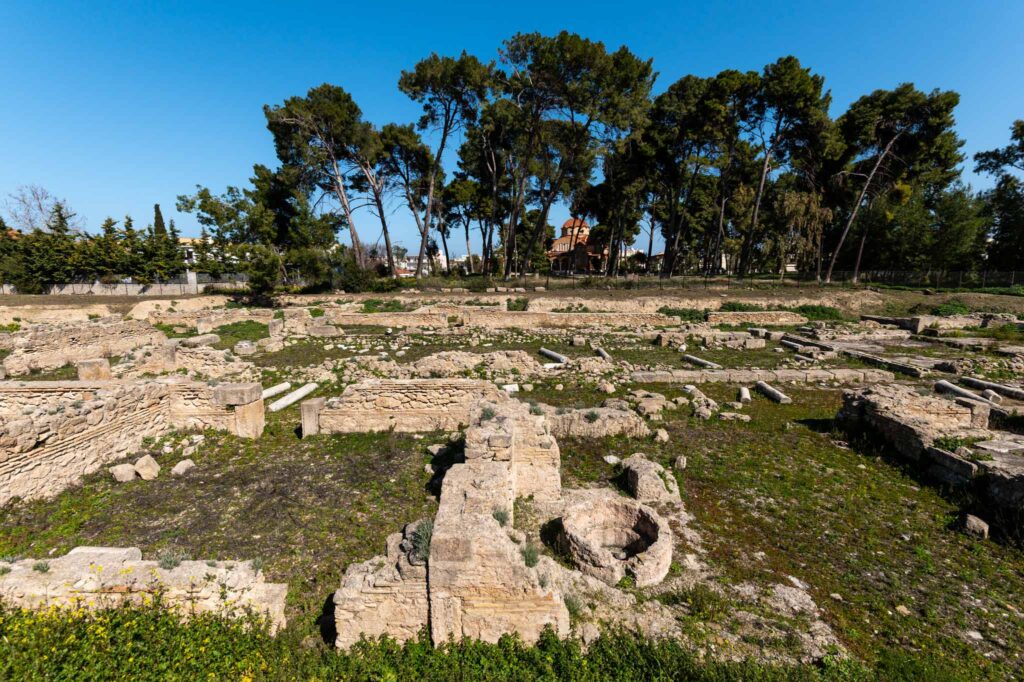
Just a few kilometres west of Kiato, in the village of Vasiliko, lies one of Corinthia’s most important archaeological sites: Ancient Sikyon. In antiquity the city was renowned for its painting and sculpture and produced several great artists.
What to see
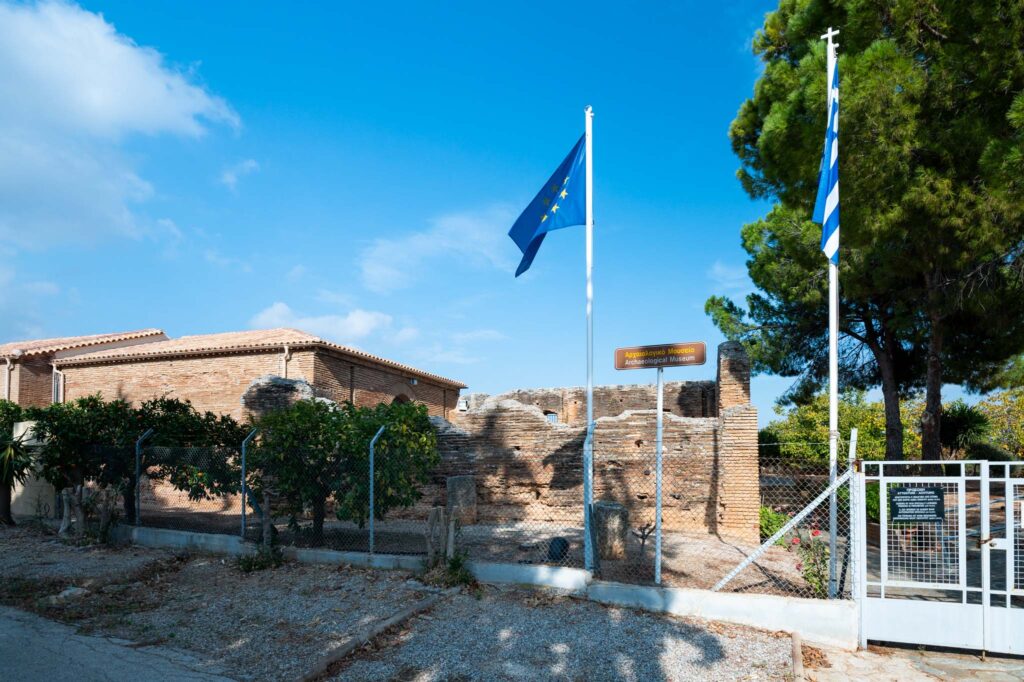
Highlights include the ancient theatre, the agora, the bouleuterion and the baths, while the Archaeological Museum — housed in a Roman bath — displays mosaics and local finds.
Good to know
Entry from €2, usually open 08:00–15:00 (closed Mondays). Combine it with our list of sights and a coffee on Kiato’s seafront.
Find it on the interactive map and plan your route.
The Strategic Move of Demetrius Poliorcetes
The site visitors explore today is actually the “new” city of Sikyon. In 303 BC, the Macedonian general Demetrius Poliorcetes convinced the inhabitants to abandon their original settlement on the coastal plain—which was vulnerable to attacks—and move to the naturally fortified plateau where the ruins stand today. For a period, the city was even renamed Demetrias in his honor, though the traditional name eventually returned. This relocation was a masterstroke of urban planning, utilizing the high ground to provide a defensive vantage point overlooking the Corinthian Gulf and the fertile plains below.
By walking through the site, you are traversing a city designed with Hellenistic precision. The plateau provided not only safety but also a prestigious stage for the city’s architectural ambitions. The layout reflects the social and political structure of the time, with the public buildings concentrated in the agora to serve as the heart of civic life. Even today, standing near the edge of the plateau, it is easy to understand why the ancient Sicyonians chose this spot; the panoramic views of the sea and the surrounding olive groves remain as breathtaking as they were two millennia ago.
The Cradle of Hellenic Art
While many ancient cities were known for their military prowess, Sikyon was the intellectual and artistic capital of the Peloponnese. It was home to the celebrated Sicyonian School of painting, which was credited with the invention of several revolutionary techniques, including the use of encaustic (wax-based) painting. Great masters like Eupompus and Pamphilos taught here, the latter being the tutor of Apelles, the personal painter of Alexander the Great.
The city’s contribution to sculpture was equally monumental. It was the birthplace of Lysippos, one of the three greatest sculptors of the Classical era. Lysippos was famous for introducing a new, more slender canon of proportions for the human body and for his ability to capture realistic detail in bronze. As you walk through the agora, imagine the square once filled with bronze statues that were the envy of the Mediterranean world. The artistic tradition of Sikyon was so respected that even the Romans, during their occupation, sought out Sicyonian artworks to decorate the villas and public spaces of Rome.
The Grand Theatre of Sikyon
The theatre is undoubtedly the crown jewel of the archaeological site. Carved into a natural hollow of the hillside, it is one of the largest and most impressive theatres in ancient Greece. Its sheer scale suggests that Sikyon was a city of significant wealth and population during its peak. What makes this theatre particularly fascinating for archaeology enthusiasts are the vaulted tunnels on either side of the stage, which allowed actors to enter the orchestra with dramatic flair.
The “Charonian steps,” an underground passage leading from the backstage area to the center of the orchestra, are still visible. These were used for the sudden appearance of characters representing gods or spirits from the underworld. Standing in the center of the orchestra today, the acoustics remain remarkable. Even a whisper can carry to the upper tiers of the stone seating. The theatre was not just a place for drama; it was the assembly point for the citizens to discuss the fate of their city-state, making it a place where culture and democracy intertwined.
The Roman Transformation and the Baths
After the Roman destruction of Corinth in 146 BC, Sikyon briefly became the most important city in the region and took over the management of the Isthmian Games. This era of Roman patronage left a distinct architectural mark. The Roman Baths, which now house the Archaeological Museum, are a testament to the sophisticated engineering of the period. The massive brick walls and the complex hypocaust system—an early form of central heating that circulated hot air under the floors—showcase the Roman emphasis on luxury and public hygiene.
The transformation of these baths into a museum is a clever use of historical space. Within these sturdy walls, visitors can view intricate floor mosaics that once graced the homes of wealthy Sicyonians. These mosaics often depict mythological scenes and intricate geometric patterns, rendered with thousands of tiny, colorful stones. The museum also preserves delicate pottery, figurines, and inscriptions that provide a window into the daily lives, religious practices, and funeral customs of the people who once walked these streets.
Walking Through the Agora
The agora, or marketplace, was the pulse of the city. At Sikyon, the agora was vast, flanked by impressive stoas (covered walkways) that provided shade for merchants and philosophers alike. One of the most significant structures here is the Bouleuterion, or council chamber. This was where the city’s leaders met to debate laws and policy. Its rectangular floor plan and the remains of the internal columns hint at a grand, dignified space intended to inspire civic duty.
Adjacent to the council chamber lies the Long Stoa, which would have been bustling with activity. Archaeological excavations have revealed that the agora was constantly evolving, with new monuments and structures added as the city’s fortunes changed. Exploring this area requires a bit of imagination, as you trace the foundations of shops, shrines, and administrative offices. The stillness of the site today contrasts beautifully with the mental image of a crowded, noisy Hellenistic market filled with the scent of spices, the sound of coins, and the heated debates of citizens.
The Village of Vasiliko
The modern experience of Ancient Sikyon is inseparable from the village of Vasiliko, which sits right at the edge of the ruins. This quiet, traditional settlement offers a glimpse into the rural life of Sikyonia. After spending a few hours among the stones of the past, the village provides a perfect transition back to the present. You might see locals tending to their gardens or gathering at the small square. The village architecture, with its stone houses and tiled roofs, harmonizes with the surrounding landscape, making it a peaceful base for your archaeological explorations.
The relationship between the village and the ancient site is one of stewardship. Many of the families in Vasiliko have lived in the shadow of the theatre for generations, and there is a palpable sense of pride in their heritage. The surrounding area is dominated by agriculture, particularly the cultivation of grapes and olives, which have been the lifeblood of Sikyonia since the days of the tyrants.
Sikyonia Beyond the Plateau
While the ruins of Ancient Sikyon are the primary draw, the Municipality of Sikyonia (Δήμος Σικυωνίων) offers much more for the curious traveler. The geography of the region transitions rapidly from the blue waters of the Corinthian Gulf at Kiato to the rugged, pine-covered slopes of Mount Kyllini. As you drive inland from the archaeological site, the road winds through vineyards that produce the famed grapes of the region.
A short journey further into the hills leads toward the ancient site of Titani, another significant point on the map of Sikyonia. Titani was home to an important Asklepion, a healing sanctuary dedicated to the god of medicine. Though smaller than the site at Sikyon, Titani offers a more secluded and wild atmosphere, with ruins tucked away in a verdant landscape. These interconnected sites remind us that Sikyonia was a densely populated and culturally rich territory where every valley and hilltop had its own story and sacred significance.
A Legacy of Drama and Music
Sikyon is often cited by ancient historians as the place where tragic drama was first developed, even before it reached its heights in Athens. The city held legendary contests of choral music and poetry. This tradition of performance is a key part of the local identity. Today, the theatre is occasionally used for special cultural events and performances, allowing the ancient stones to echo once again with the voices of actors and musicians. These events are a bridge across time, honoring a legacy of creativity that has lasted for over two thousand years.
The enduring appeal of Sikyonia lies in this blend of high culture and natural beauty. From the innovative painters of the Sicyonian School to the master sculptors and the early dramatists, the people of this land shaped the aesthetic values of Western civilization. Visiting the site today is not just a lesson in history; it is a tribute to the human impulse to create, build, and seek beauty in every corner of life.
See it on an organised trip
Organised excursions by Lia’s Travel, departing from Kiato and Corinthia.
Sights & things to do nearby
All of them inside the Municipality of Sikyona — Kiato and its villages.
Take this page with you
Scan with your phone camera to open it on the go.
Things to do there — Kiato & Corinthia
Optional tours, tickets and activities for your days here — you choose what suits you.
Activities, experiences and local guides — book ahead and skip the queues.
See options →A guided day with transport from Athens to Ancient Corinth and Nafplio, with free cancellation. Also: Corinth Canal & wine tasting, Ancient Corinth half-day
See options →Compare prices from all the major rental companies, with free cancellation on most offers. Also: Loutraki, Nafplio, Argos
See options →Activities are provided and sold by our partners. You complete the booking on their own page, at exactly the same price.
Before you arrive
Land in Kiato already connected
Skip the SIM counter and the roaming bill. MyEsim is a Greek eSIM app — you set the plan up at home and it activates the minute you land, so the map works before you even leave the station. Visit Kiato readers get 10% off.
- 180+ countries
- Ready in minutes
- Support in English & Greek
Enter the code at checkout on myesim.gr. Works on iPhone XS and newer and on most Android phones from 2019 onwards.