
28/10/2025· Blog
Religious & cultural tourism in Sikyonia
Sikyonia hides important religious and cultural monuments, perfect for a quieter, more meaningful exploration.
Monasteries
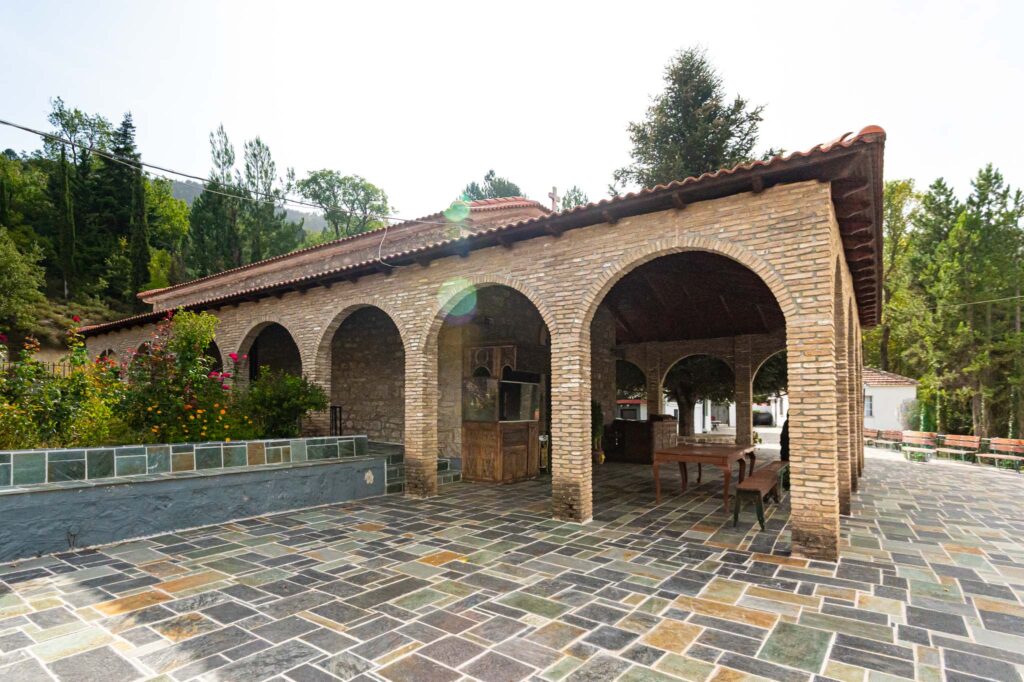
The Agios Georgios Monastery in Feneos, with its remarkable frescoes, and the Dormition of the Virgin Monastery in Kaisari stand out for their history and serenity.
Museums
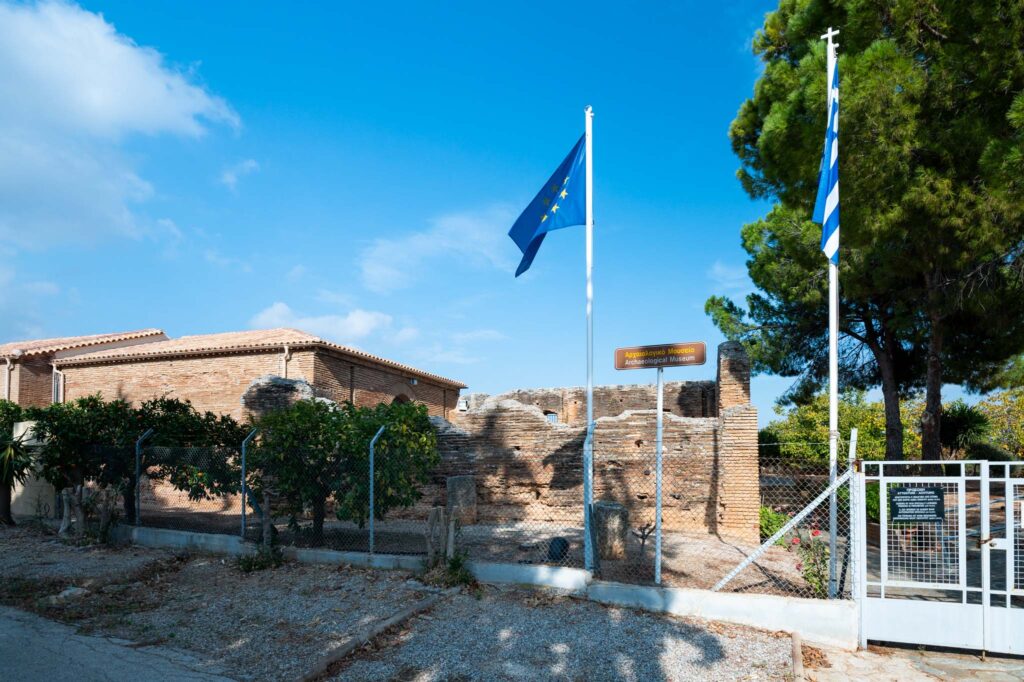
The Archaeological Museums of Ancient Sikyon and Feneos, together with the Stymphalia Environment Museum, tell the story of the land.
Find every sight with hours & entry on the Sights page.
The Ancient Theater of Sikyon and the Artistic Legacy
The Cradle of Ancient Arts
To understand the cultural weight of Sikyonia, one must look back to the era when Ancient Sikyon was a primary center for the arts in Greece. It was not merely a city-state but a prestigious school for painting and sculpture. This artistic pedigree is best felt at the Ancient Theater of Sikyon, one of the largest and most impressive structures of its kind in the Peloponnese. Carved into the side of a hill, the theater offers a panoramic view that bridges the gap between the earth and the heavens, a sight that surely inspired the ancient performers.
Walking through the vaulted entrances (the “parodoi”), visitors can still sense the architectural innovation of the Sicyonians. Unlike many other theaters, parts of the seating were cut directly from the bedrock. This site serves as a reminder that cultural tourism in Sikyonia is not just about observing the past, but about understanding the foundations of Western aesthetics. The proximity of the theater to the Roman baths and the ancient agora creates a cultural park where history feels layered and continuous.
The Byzantine and Frankish Footprint
The Cistercian Abbey of Zaraka
In the basin of Stymphalia, near the shores of the mythical lake, lies a monument that is unique in the Greek landscape: the Abbey of Zaraka. This site represents a rare fusion of Gothic architecture and the Greek environment. Built in the 13th century by Cistercian monks from France, the abbey was constructed using materials from the nearby ancient ruins of Stymphalos. Today, the standing stone arches and the layout of the church evoke a sense of the medieval “Frankokratia” period, offering a cultural narrative that differs from the typical Byzantine story of the region.
The ruins of Zaraka stand as a silent witness to a time when Western and Eastern traditions met in the heart of the Peloponnese. For the culturally minded traveler, it is a hauntingly beautiful spot where the silence of the lake and the geometric precision of the Gothic ruins create an atmosphere of profound contemplation.
The Monastery of Panagia Lechova
High on the slopes of Mount Vesiza, tucked away in a dense forest of pines and firs near the village of Kryoneri, the Monastery of Panagia Lechova is a jewel of Middle Byzantine architecture. With a katholikon dated to the 11th–12th century, the monastery has survived centuries of upheaval, remaining a beacon of spiritual life in Sikyonia. The main church (Katholikon) is a cross-in-square building that houses exceptional frescoes and a finely carved marble iconostasis.
Visiting Lechova is as much a cultural experience as it is a religious one. The monastery played a crucial role during the Greek War of Independence, serving as a refuge and a strategic meeting point. The harmony between the stone masonry and the surrounding natural forest exemplifies the “monastic landscape” of Sikyonia, where man-made devotion and natural beauty are inextricably linked.
Living Traditions and Mountainous Heritage
The Architectural Splendor of Goura and Feneos
The cultural identity of Sikyonia is also preserved in the stone-built villages of the mountainous hinterland. Goura, the administrative heart of the Feneos region, is a living museum of 19th-century architecture. The central square is dominated by the imposing church of Taxiarches and surrounded by the “archontika” (mansions) of the Lanza and Ikonomou families. These stone houses, with their heavy wooden doors and arched windows, tell the story of a wealthy merchant class that thrived in the high plateaus.
Each village in the Sikyonian highlands, from Mosia to Mesino, maintains its own cultural pace. The local “kafeneia” are not just places for coffee; they are informal archives of oral history where visitors can hear stories of the old transhumance routes—the seasonal movement of shepherds and their flocks—which shaped the social fabric of the region for centuries.
Religious Feasts and Local Panigiria
Cultural tourism in Sikyonia reaches its peak during the “Panigiria”—the traditional religious festivals that celebrate the patron saints of each village. These events are the most authentic expression of local identity, combining Orthodox liturgy with communal feasts, folk music, and dancing. The feast of the Dormition of the Virgin on August 15th is particularly significant, with celebrations erupting in Kaisari and various mountain hamlets.
During these festivals, the “klarnino” (clarinet) leads the dancers in circular movements that have remained unchanged for generations. Participation is often welcomed, offering visitors a chance to experience the “philoxenia” (hospitality) of Sikyonia firsthand. These gatherings are also the best time to sample local culinary traditions, such as the famous Stymphalian “gournopoula” (roast piglet) and the prized beans of the Feneos plateau, which have been granted Protected Geographical Indication status.
The Intersection of Environment and Culture
The Legend of the Stymphalian Birds
No cultural tour of Sikyonia is complete without acknowledging the mythological weight of Lake Stymphalia. This is the site of Heracles’ sixth labor, where he had to defeat the man-eating Stymphalian Birds. This myth is not just a story; it is a cultural layer that colors the way the landscape is perceived. The Stymphalia Environment Museum does an excellent job of connecting this mythological past with the ecological present, showing how the inhabitants of Sikyonia have interacted with the wetlands for millennia.
The remains of the ancient city of Stymphalos, located right by the lake, offer a glimpse into a city that was once a thriving hub with its own theater, temples, and fortifications. Exploring these ruins while the reeds of the lake rustle in the wind provides a deep sense of the “genius loci”—the spirit of the place—that has fascinated writers and travelers since the time of Pausanias.
Spiritual Solitude in the Caves
For those seeking the more esoteric side of Sikyonian religious history, the “ascetic” caves and small chapels built into the rock faces provide a fascinating detour. Throughout the gorges of the Olvios and Asopos rivers, hermits once sought isolation. Small, often overlooked chapels like Agios Nikolaos of the Rock offer breathtaking views and a glimpse into the austere life of the medieval recluses. These sites require a bit of a hike, but they reward the visitor with a sense of peace and a connection to the rugged, spiritual landscape that defines much of the Corinthian interior.
See it on an organised trip
Organised excursions by Lia’s Travel, departing from Kiato and Corinthia.
Sights & things to do nearby
All of them inside the Municipality of Sikyona — Kiato and its villages.
Take this page with you
Scan with your phone camera to open it on the go.
Things to do there — Kiato & Corinthia
Optional tours, tickets and activities for your days here — you choose what suits you.
Activities, experiences and local guides — book ahead and skip the queues.
See options →A guided day with transport from Athens to Ancient Corinth and Nafplio, with free cancellation. Also: Corinth Canal & wine tasting, Ancient Corinth half-day
See options →Compare prices from all the major rental companies, with free cancellation on most offers. Also: Loutraki, Nafplio, Argos
See options →Activities are provided and sold by our partners. You complete the booking on their own page, at exactly the same price.
Before you arrive
Land in Kiato already connected
Skip the SIM counter and the roaming bill. MyEsim is a Greek eSIM app — you set the plan up at home and it activates the minute you land, so the map works before you even leave the station. Visit Kiato readers get 10% off.
- 180+ countries
- Ready in minutes
- Support in English & Greek
Enter the code at checkout on myesim.gr. Works on iPhone XS and newer and on most Android phones from 2019 onwards.