
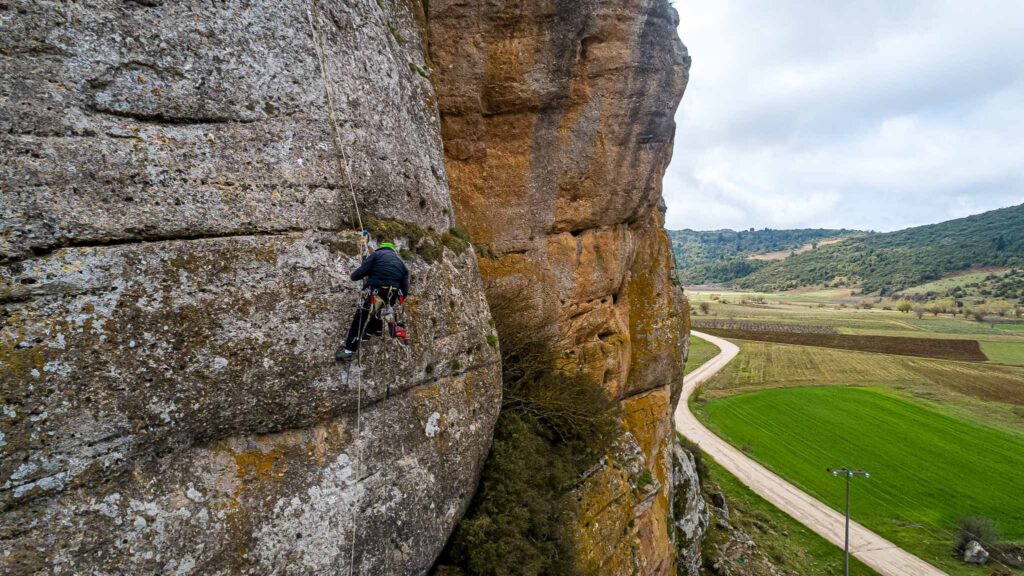
17/10/2026· Blog
Rock climbing in mountainous Sikyonia: Tarsos, Frygani and Kefalari Mill
The mountains of Sikyonia, just above Kiato, have three equipped limestone climbing crags. They are close to Athens, have routes for beginners too, and lie in quiet mountain landscapes with views of lakes and vineyards.
Tarsos
The Tarsos crag lies on the cliffs near Kato Tarsos, on the Feneos plateau. It has been developed gradually since 2015, and its routes were equipped together with local organisations. It suits climbers looking for new rock away from the busy crags.
Frygani
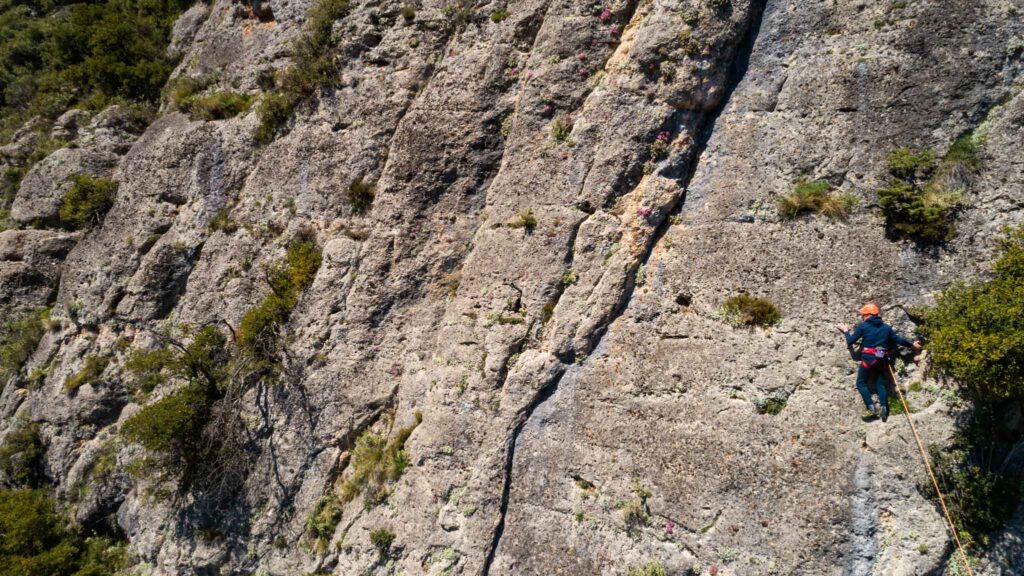
Frygani rises above the Stymphalia basin, with densely bolted routes that suit climbing schools and beginners. The view over the lake and the vineyards, and the fairly short distance from Athens, make it a good choice even for a day trip.
Kefalari Mill
At Kefalari Mill the limestone routes are well equipped and ideal for climbing schools and beginners, in a quiet landscape with vineyards and open views.
Before you go
- If you have no experience, start with a climbing school or an experienced guide.
- Bring a helmet and your own gear, and check the weather: the rock is slippery after rain.
- Spring and autumn are the most pleasant seasons for climbing.
- Combine the trip with Lake Stymphalia, the Feneos sinkholes or Lake Doxa.
Beyond the Crags: The Vertical Landscape of Sikyonia
While the equipped sectors of Tarsos, Frygani, and Kefalari Mill form the backbone of the region’s climbing infrastructure, the broader mountainous terrain of the Sikyonia municipality offers a unique topography for those who prefer an exploratory approach to the outdoors. The geology here is defined by a complex interplay of limestone formations, deep canyons, and high-altitude plateaus that have shaped local life for millennia. For the modern visitor, these same features provide a dramatic backdrop to a day spent on the rock, turning a simple climbing session into a full immersion into the Peloponnesian interior.
The transition from the coastal plains of Kiato to the high-mountain reaches of Sikyonia is marked by a sudden shift in climate and terrain. As you climb higher, the humidity of the Corinthian Gulf gives way to the crisp, thin air of the Ziria (Kyllini) range. This is an environment where the limestone is not merely a surface to be scaled, but a living part of the landscape’s history. From the ancient paths that once connected the mountain settlements to the shepherd trails that crisscross the slopes, the vertical nature of the terrain is ingrained in the cultural fabric of the villages.
Geological Heritage and Terrain Diversity
The rock formations that host our climbing crags are part of a larger geological tapestry. The limestone in Sikyonia is characteristically varied, ranging from compact, weathered faces that demand technical precision to overhanging pockets and tufas that test endurance. This diversity is why the region is increasingly attracting those who want to step away from the polished, crowded sectors of more famous climbing destinations.
For those interested in the environment, the limestone itself tells a story. Many of the cliffs in the Sikyonia hinterlands are punctuated by small caves and karst features, many of which have been used since antiquity for shelter or as shrines. When visiting these crags, it is common to find yourself in the company of golden eagles or kestrels that nest in the inaccessible upper reaches of the rock faces. Respecting the nesting periods and the fragility of these high-altitude ecosystems is essential for ensuring that climbing remains a sustainable activity in these pristine mountain corridors.
Integrating Climbing with Mountain Culture
Climbing in Sikyonia is more than a sport; it is an invitation to explore the quiet corners of the Corinthia region. The proximity of the climbing crags to traditional mountain villages allows for a rare combination of activity and tranquility. After a morning on the wall, the descent back into the village squares offers a chance to experience a pace of life that has remained unchanged for decades. These are places where the morning starts with the sound of bells from flocks on the nearby hills and ends with the quiet contemplation of the sunset over the valley floors.
A Few Suggestions for Your Sikyonia Ascent
- Mind the transition: As you gain altitude moving toward Feneos or Stymphalia, ensure your vehicle is prepared for mountain road conditions, which can be narrower and more winding than the coastal highways.
- Embrace the “Rest Day” culture: The beauty of these crags lies in their location. Use your non-climbing days to hike the trails surrounding Lake Stymphalia or to explore the ruins of ancient Sikyona, where the history of the region is etched into the earth.
- Respect the privacy of mountain life: Many of our climbing areas are situated near working agricultural lands. Always ensure that your gear is packed tightly, your waste is carried out, and that you park in designated areas to avoid obstructing local tractor paths or gate access.
- Appreciate the light: The Sikyonia landscape is famous for its changing light. The way the shadows fall across the Feneos plateau in the late afternoon transforms the limestone, making it a favorite time of day for photographers as well as climbers.
The Seasonality of the High Country
One of the distinct advantages of Sikyonia is the ability to adapt your climbing schedule to the Mediterranean climate. While the lowlands near Kiato can be warm, the mountain plateaus often retain a cool, bracing temperature even into the early summer. Conversely, during the late autumn months, the low-angled sun creates a perfect environment for climbing on south-facing walls, where the rock retains enough warmth to make cold-weather sessions comfortable.
We encourage all visitors to treat these crags as a gateway to understanding the Sikyonian mountains. Whether you are a beginner taking your first steps on the rock at Frygani or a seasoned climber exploring the newer routes at Tarsos, you are contributing to a growing community that values the marriage of sport, nature, and the preserved, authentic spirit of the Greek countryside.
Planning your visit to Kiato?
Visit Kiato is the travel guide for the region — hotels, tavernas, wineries and things to do, all in one place.
See it on an organised trip
Organised excursions by Lia’s Travel, departing from Kiato and Corinthia.
Sights & things to do nearby
All of them inside the Municipality of Sikyona — Kiato and its villages.
Take this page with you
Scan with your phone camera to open it on the go.
Things to do there — Kiato & Corinthia
Optional tours, tickets and activities for your days here — you choose what suits you.
Activities, experiences and local guides — book ahead and skip the queues.
See options →A guided day with transport from Athens to Ancient Corinth and Nafplio, with free cancellation. Also: Corinth Canal & wine tasting, Ancient Corinth half-day
See options →Compare prices from all the major rental companies, with free cancellation on most offers. Also: Loutraki, Nafplio, Argos
See options →Activities are provided and sold by our partners. You complete the booking on their own page, at exactly the same price.
Before you arrive
Land in Kiato already connected
Skip the SIM counter and the roaming bill. MyEsim is a Greek eSIM app — you set the plan up at home and it activates the minute you land, so the map works before you even leave the station. Visit Kiato readers get 10% off.
- 180+ countries
- Ready in minutes
- Support in English & Greek
Enter the code at checkout on myesim.gr. Works on iPhone XS and newer and on most Android phones from 2019 onwards.